


In the rainforest, bright colors usually mean one thing:
Stay away.
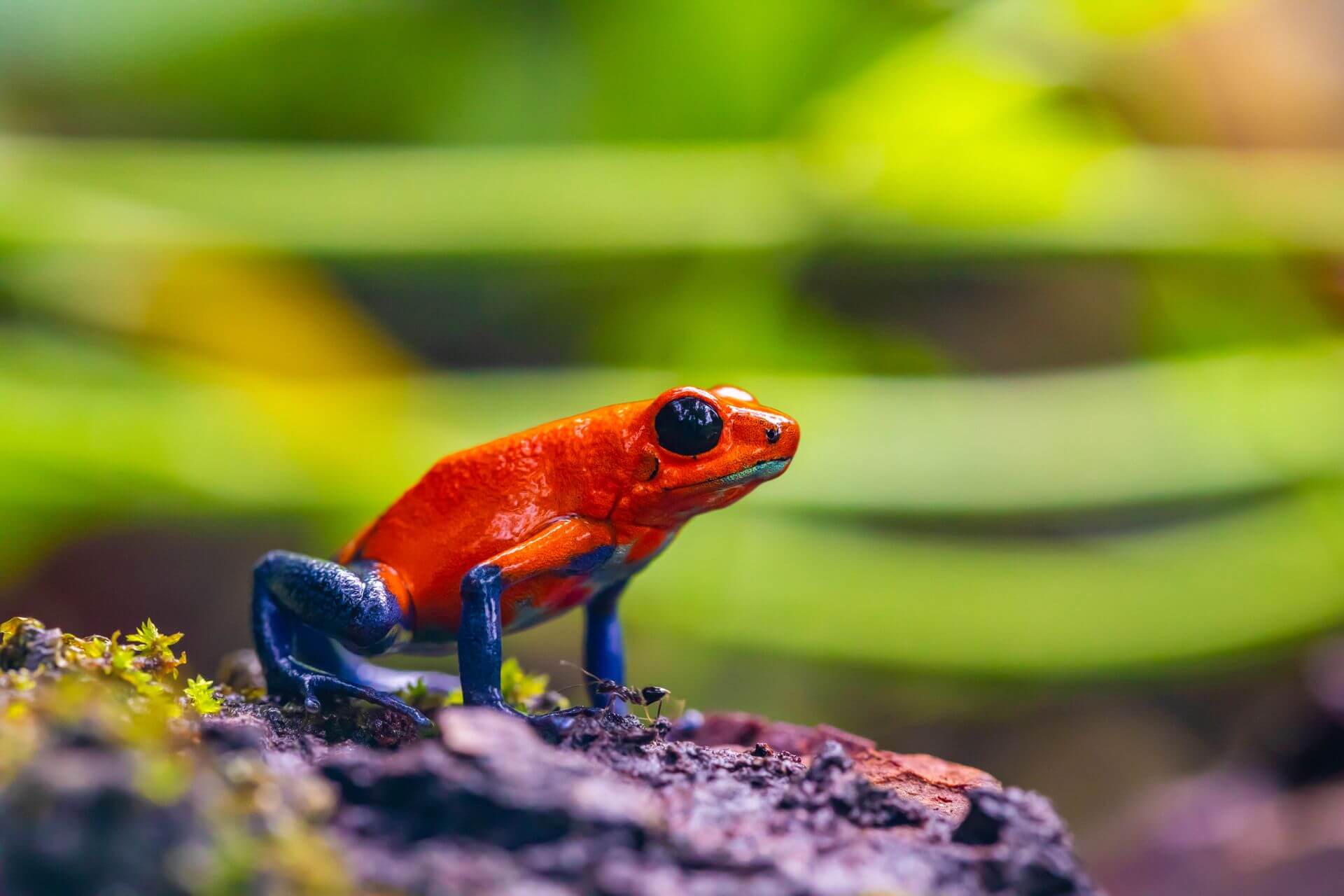
Among the fallen leaves and moss-covered trees lives a tiny amphibian no larger than your thumb, yet its brilliant blue, yellow, red, or orange skin can stop predators in their tracks.
This is the poison dart frog, one of the most colorful—and most fascinating—amphibians on Earth.
Unlike animals that rely on camouflage, poison dart frogs do the exact opposite. Their vivid colors are a warning signal known as aposematic coloration. Instead of hiding, they advertise a simple message: “I’m dangerous to eat.”
Many poison dart frogs produce toxins through their skin, making them unappealing or even deadly to predators. Scientists believe these toxins come from the tiny ants, mites, and other insects they eat in the wild. Interestingly, frogs raised in captivity often lose much of their toxicity because they no longer consume the same diet.
Despite their small size, poison dart frogs play an important role in rainforest ecosystems. They help control insect populations and are themselves part of a delicate food web. Their presence is also considered a sign of a healthy environment, as amphibians are highly sensitive to pollution and habitat loss.
Today, many species face threats from deforestation, climate change, and the illegal wildlife trade. Protecting these tiny frogs also means protecting the forests they call home.
The next time you see a poison dart frog, remember that its brilliant colors aren’t just beautiful—they’re a survival strategy refined over millions of years. Sometimes, nature’s loudest warning comes in its smallest package.