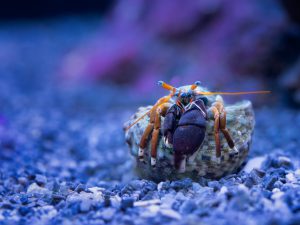


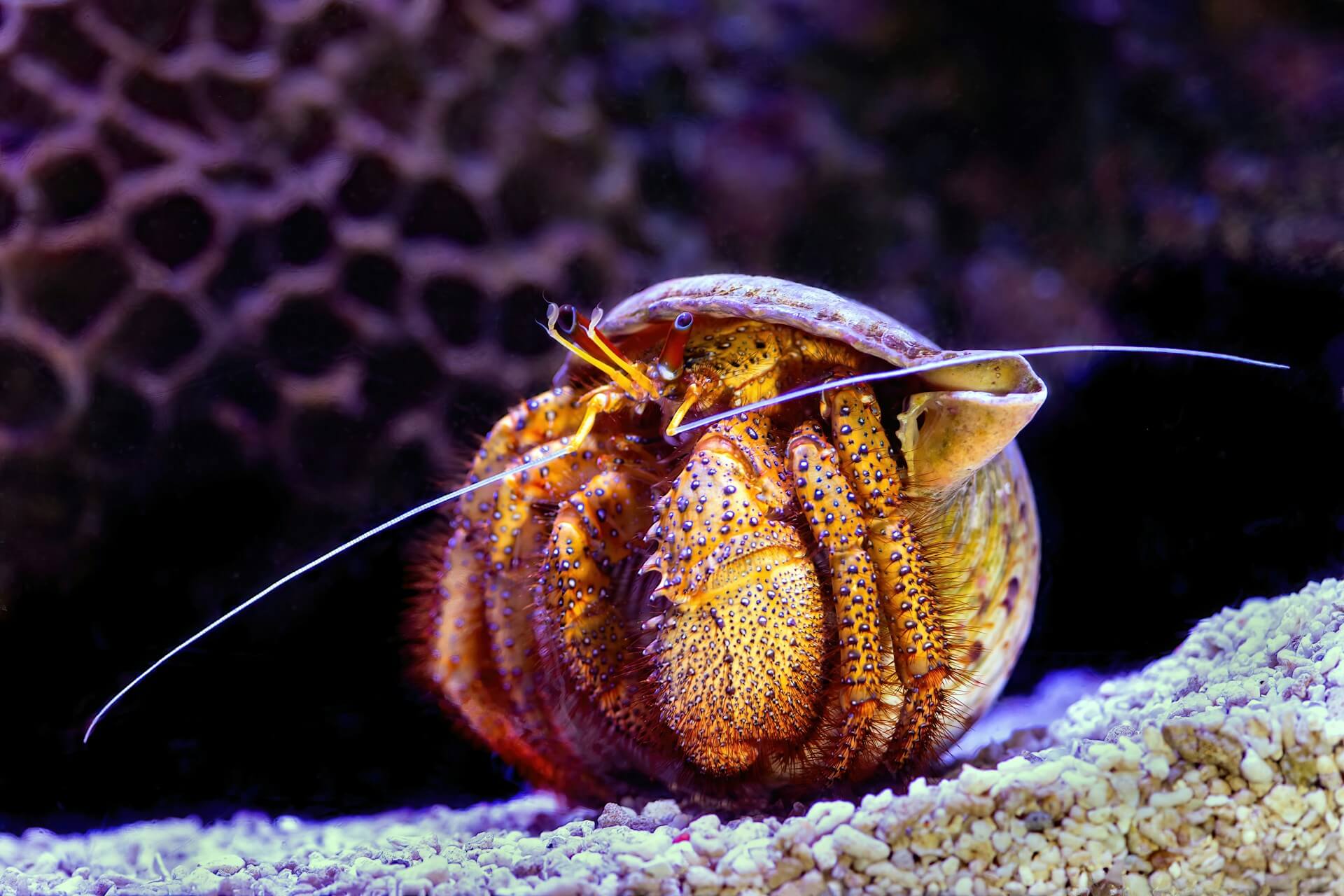
Unlike most crabs, the hermit crab doesn’t have a hard shell covering its entire body.
Instead, it borrows one.
Its soft, vulnerable abdomen cannot protect itself from predators, so the hermit crab searches for empty seashells left behind by marine snails. Once it finds a shell that fits, it carefully crawls inside and carries its portable home wherever it goes.
A Home That Must Be Replaced
As the hermit crab grows, its shell eventually becomes too small.
Finding a larger one is essential for survival. The crab carefully inspects empty shells, checking their size, weight, and shape before deciding whether to move in. If the new shell isn’t suitable, it simply walks away and continues searching.
In coastal habitats, several hermit crabs may even gather together while waiting for a larger shell to become available. When one crab upgrades to a bigger shell, another quickly moves into the abandoned one, creating a remarkable “shell exchange.”
More Than Just Protection
A shell does much more than shield the hermit crab from predators.
It also helps reduce water loss, protects the crab from extreme temperatures, and provides a safe place to hide when danger approaches. Without a suitable shell, a hermit crab becomes an easy target for fish, birds, octopuses, and other predators.
Because shells are such valuable resources, hermit crabs often compete fiercely to claim the best ones.
Nature’s Ultimate Home Seeker
From tropical beaches to rocky coastlines, hermit crabs spend much of their lives searching for the perfect home.
Their survival depends not on building a shell of their own, but on finding one left behind by another animal.
It’s a simple reminder that in nature, one creature’s abandoned home can become another’s greatest treasure.