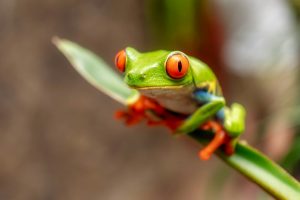


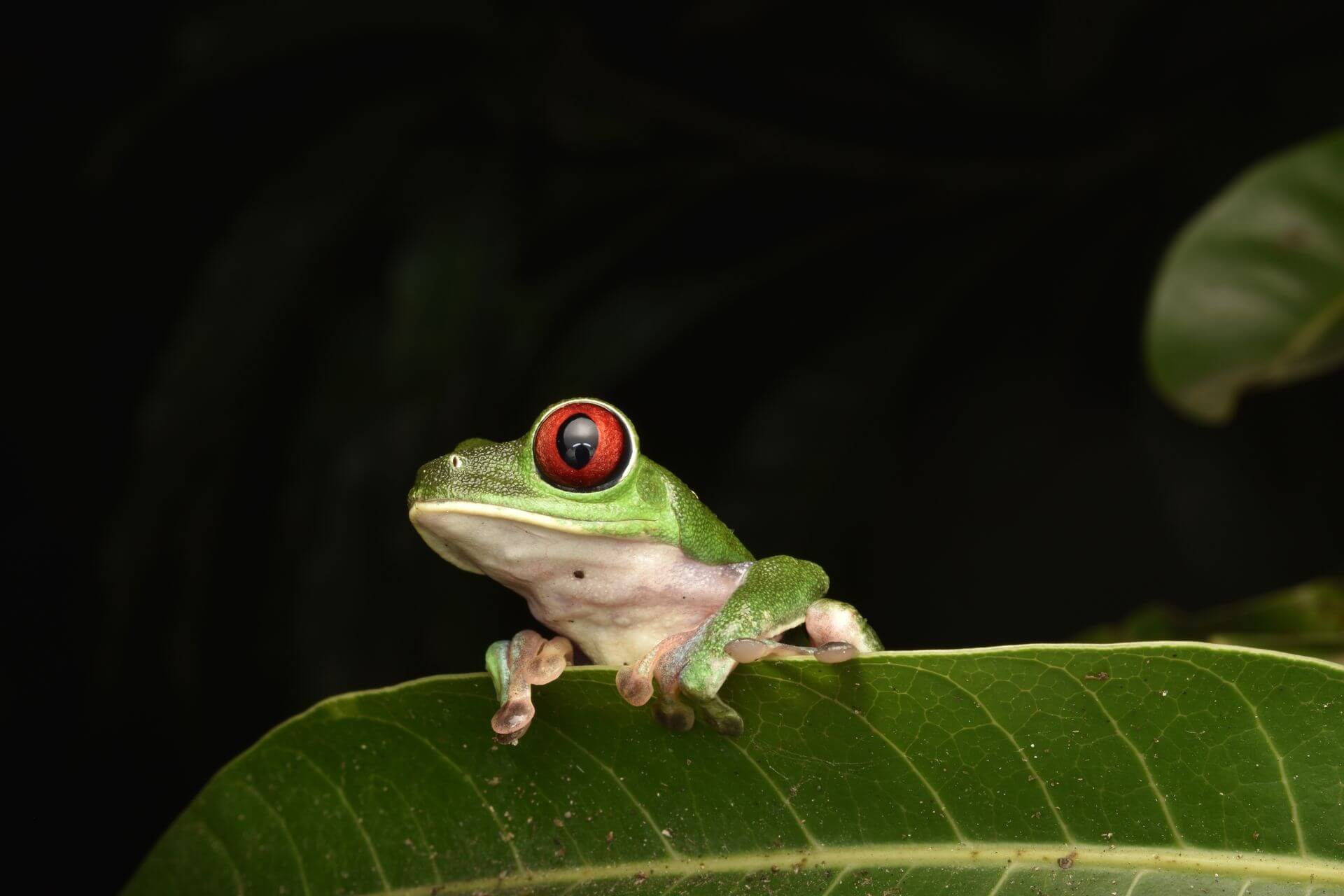
Hidden among the lush green leaves of Central American rainforests lives one of the world’s most recognizable amphibians—the red-eyed tree frog.
By day, it’s almost invisible. Its bright green body blends perfectly with surrounding leaves, while its vivid red eyes remain tightly closed.
But when danger approaches, everything changes.
The frog suddenly opens its brilliant red eyes, revealing a flash of intense color that can startle birds, snakes, and other predators. Scientists believe this behavior, known as startle display, gives the frog a brief moment to escape while the predator hesitates in confusion.
Unlike many colorful amphibians, the red-eyed tree frog is not highly poisonous. Instead of relying on toxins, it depends on camouflage, quick reflexes, and its startling appearance for survival.
Its long, sticky toe pads allow it to climb smooth leaves and branches with ease, while its powerful hind legs help it leap away from danger in an instant.
Although these frogs are still relatively common, their rainforest habitat continues to shrink due to deforestation and climate change.
The red-eyed tree frog reminds us that survival isn’t always about being the strongest. Sometimes, a single flash of color is all it takes to outsmart a predator in one of Earth’s most competitive ecosystems.