





When night falls, most predators lose one of their greatest advantages—the ability to see.
But for the pit viper, darkness changes nothing.
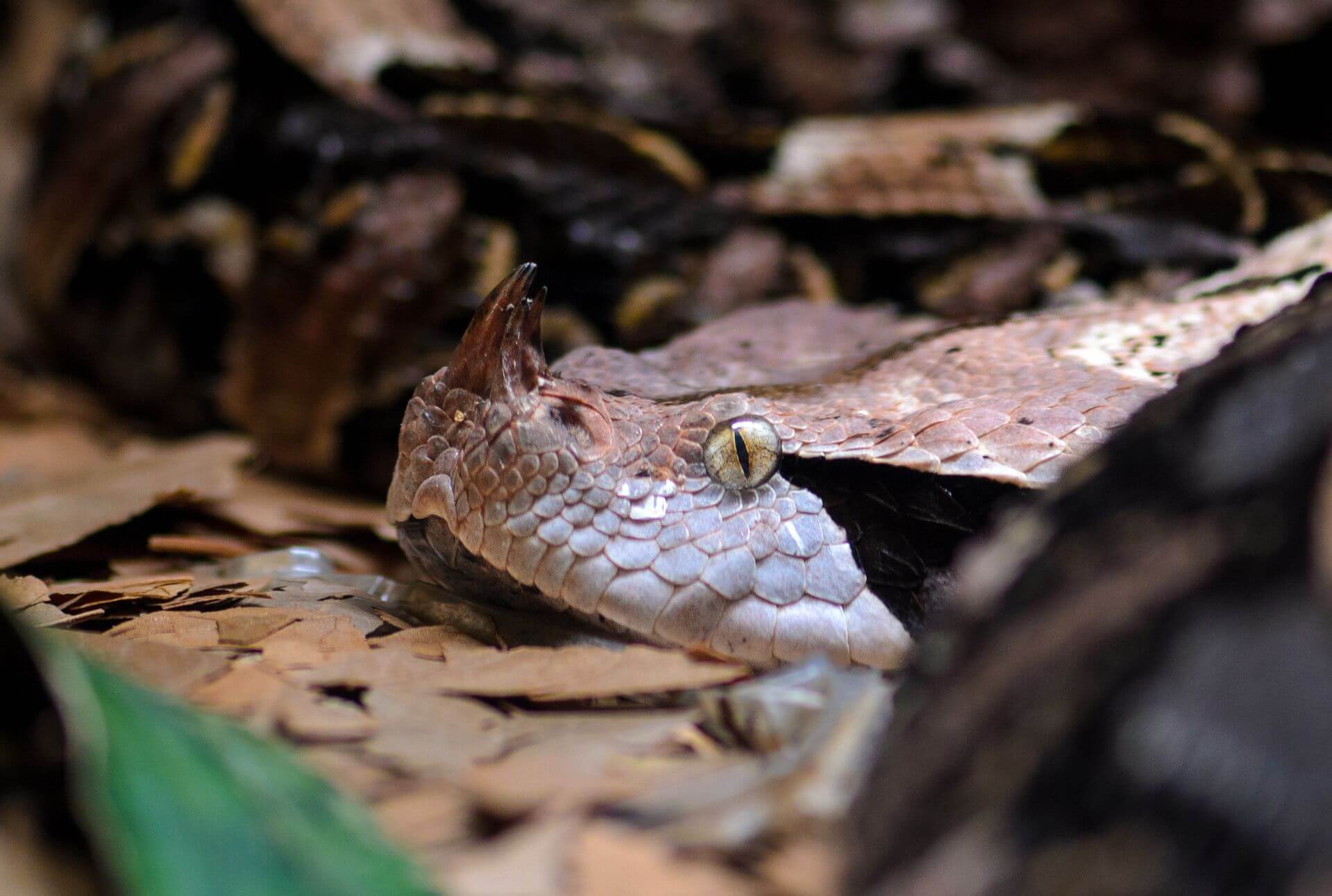
Hidden between its eyes and nostrils are tiny organs called heat-sensing pits. These specialized sensors detect infrared radiation, allowing the snake to “see” the body heat of nearby animals, even in total darkness.
A warm-blooded mouse hiding beneath leaves or a bird resting on a branch creates a heat signature that stands out against the cooler surroundings. The pit viper combines this thermal information with its normal vision, creating a detailed picture of its environment without relying on light alone.
This remarkable adaptation makes pit vipers highly effective ambush predators. Instead of chasing prey, they remain perfectly still, waiting for the right moment to strike with incredible speed and accuracy.
Scientists have found that these heat-sensing organs are so sensitive they can detect temperature differences of less than a fraction of a degree. Researchers are even studying them to inspire new infrared sensors and imaging technologies.
From the forests of Asia to the deserts of the Americas, pit vipers demonstrate that nature often develops extraordinary solutions to survive.
Long before humans invented thermal cameras, these snakes had already mastered the art of seeing the invisible.