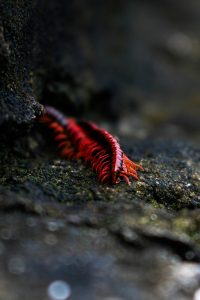




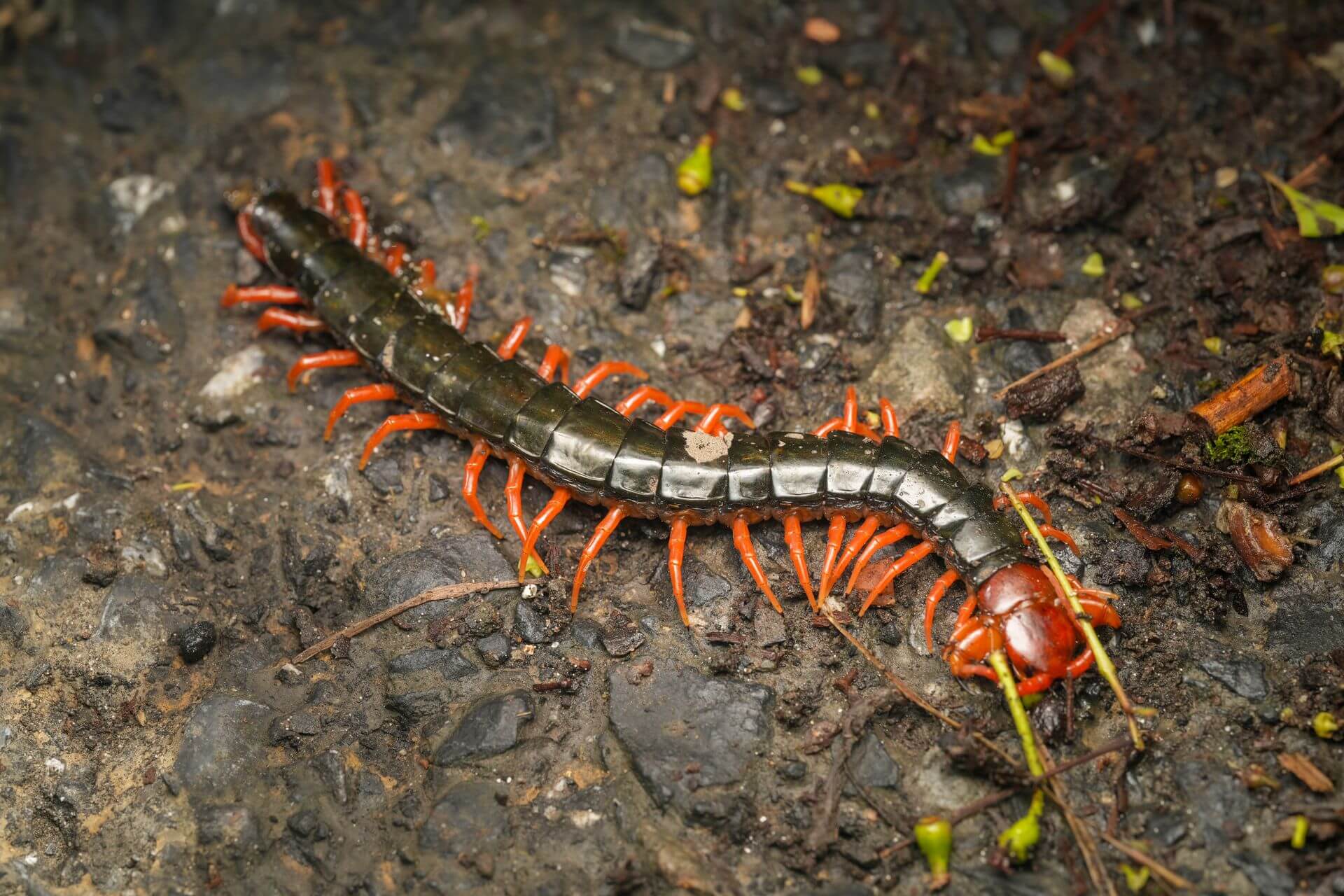
A centipede may look like it has hundreds of legs, but don’t let its appearance fool you. Every leg serves a purpose, helping this fast-moving predator chase down prey with surprising speed and precision.
Unlike millipedes, which feed mostly on plants and decaying matter, centipedes are active hunters. They prey on insects, spiders, worms, and even small frogs, lizards, and rodents. Instead of biting with their mouths, they use a pair of specialized venomous claws called forcipules, located just behind the head. These modified legs inject venom that quickly immobilizes their prey.
Centipedes prefer dark, damp environments where they can remain hidden during the day. Under rocks, fallen logs, leaf litter, and inside caves, they wait patiently for the perfect opportunity to strike.
Despite their many legs, centipedes are surprisingly agile. Their flexible bodies allow them to squeeze through narrow spaces and react instantly when threatened. Larger tropical species can grow over 30 centimeters (12 inches) long, making them among the largest terrestrial arthropod predators.
Although their appearance may seem intimidating, centipedes play an important role in nature by controlling populations of insects and other small animals.
With speed, venom, and dozens of powerful legs, the centipede proves that some of the most efficient predators are also among the smallest.